“`html
Abstract
This blog post explores the complex landscape of Canadian fisheries policies, an area currently steeped in multifaceted debates involving recreational, Indigenous, and commercial fisheries. Various stakeholders, including government bodies, Indigenous communities, and environmentalists, actively participate in reshaping these regulations to ensure sustainability, economic viability, and social equity. Through an examination of current issues and policy recommendations, this article aims to provide a comprehensive understanding of the ongoing negotiations and innovations within the sector.
Introduction
This article provides an analytical overview of the current debates shaping Canadian fisheries policies. From the competing interests of recreational users and Indigenous rights to the challenges faced by commercial fisheries and aquaculture, this post delves into the heart of the contentious issues that influence policy-making today. By dissecting each aspect and offering informed recommendations, it aims to inspire engaged discourse and provoke thought. As Canada navigates the complexities of fisheries management, this analysis emphasizes the need for balanced and inclusive approaches that satisfy ecological sustainability and cultural respect.
Approach
Our approach in analyzing Canadian fisheries policies is centered around a multi-stakeholder perspective that takes into account the differing priorities of involved entities. By evaluating how federal and provincial policies impact recreational, Indigenous, and commercial fishing, this article underscores the importance of crafting adaptive and integrative solutions.
Focus is placed on the synthesis of scientific research, traditional Indigenous knowledge, and economic considerations to propose feasible recommendations. The goal is to explore how these distinct sources of insight can be bridged to create equitable and effective policy frameworks.
Recreational Fisheries
Summary
Recreational fishing in Canada represents a significant cultural and economic activity, yet it often faces challenges related to sustainability and environmental regulations. There is a growing debate on how to balance public access with conservation imperatives, ensuring that these water bodies remain viable for future generations.
Recent changes in catch limits, habitat protections, and invasive species controls have sparked discussions on their effectiveness and impact. Recreational fishers call for a more consistent regulatory approach nationwide to eliminate confusion and ensure equitable access across provinces.
Updated Recommendations
To better manage recreational fisheries, policymakers should consider implementing more uniform guidelines across provinces, directed by ecological assessments. This would promote sustainability without compromising the recreational nature of the activity.
Additionally, increased investment in outreach and education programs could help build a conservation-minded fishing community that actively participates in habitat preservation efforts. Partnering with local organizations can also enhance monitoring and compliance initiatives.
Indigenous Fisheries
Summary
Indigenous fisheries have been the cornerstone of cultural livelihoods in Canada for centuries. Current debates focus on the recognition of Indigenous rights to fish, equitable resource sharing, and the application of traditional ecological knowledge in fisheries management.
Government efforts to harmonize resource management with Indigenous rights are ongoing, yet there is a need for more tangible progress. The significance of historical treaties and the United Nations Declaration on the Rights of Indigenous Peoples (UNDRIP) are critical components of these discussions.
Updated Recommendations
Policies should prioritize meaningful consultation with Indigenous communities, ensuring their rights and traditional practices are acknowledged. Co-management models that integrate Indigenous governance systems can facilitate balanced resource sharing and enhance conservation efforts.
Moreover, investments in capacity-building initiatives would enable Indigenous communities to actively participate in policy formulation and fisheries science, creating a more inclusive and holistic management framework.
Commercial Fisheries and Aquaculture
Summary
Commercial fisheries and the growing aquaculture sector are key pillars of Canada’s economy. However, they face significant debates surrounding sustainability, climate adaptation, and market access. Balancing economic interests with ecological responsibility is at the forefront of these discussions.
The impact of overfishing, bycatch, and habitat destruction remain on top of the agenda, with stakeholders urging for policy reforms that align with international conservation standards.
Updated Recommendations
A transition towards ecosystem-based management practices in commercial fisheries can reduce harmful impacts and promote resource sustainability. This includes stricter enforcement of quotas and investment in sustainable aquaculture technologies.
Furthermore, aligning commercial interests with conservation through market-based incentives, such as certification schemes and biodiversity offsets, can enhance industry accountability and environmental stewardship.
Towards More Effective Management
Summary
Effective management of fisheries policies requires adaptive strategies that respond to both ecological and socio-economic changes. Current debates emphasize the necessity of integrating diverse knowledge systems and fostering collaborative governance approaches.
Central to these discussions is the need for improved data collection and sharing, enabling timely and evidence-based policy adjustments that address emerging challenges such as climate change and globalization.
Updated Recommendations
Introducing integrated digital platforms for data management and communication can facilitate better policy coordination and stakeholder engagement. Such tools can promote transparency and inclusivity across different governance levels.
Adopting adaptive management frameworks that incorporate periodic review processes would allow policymakers to leverage new insights and technologies efficiently, ensuring resilience and continuity in fisheries management.
Strengthening Organization and Administration
Summary
The organization and administration of Canadian fisheries policies are often critiqued for their complexity and bureaucratic inefficiencies. Calls for streamlined processes, clearer delineation of roles among federal, provincial, and Indigenous authorities, and enhanced accountability mechanisms have emerged.
Advancements in organizational design and operational efficiency can lead to more community-centered decision-making and improved policy implementation.
Updated Recommendations
Reevaluating governance frameworks to clarify jurisdictional boundaries and administrative responsibilities could reduce complexity and improve responsiveness. Fostering partnerships across different levels of government can support more cohesive policy outcomes.
Developing a national registry of stakeholders and fisheries resources would provide comprehensive oversight and enable better coordination of cross-border fishery activities within Canada.
Supporting Knowledge Production (Indigenous, Science, and Experiential)
Summary
An intersectional approach to knowledge production in fisheries combines Indigenous wisdom, scientific research, and experiential insights, offering a richer understanding of marine ecosystems. Current debates focus on how these varying knowledge systems can be harmonized and operationalized within policy frameworks.
There is a strong advocacy for integrating Indigenous knowledge systematically into scientific assessments and policy development processes, reflecting broader societal changes towards reconciliation and inclusion.
Updated Recommendations
Creating collaborative research initiatives that involve Indigenous communities and scientific institutions can foster mutual learning and innovative solutions. Structured dialogue platforms can facilitate ongoing knowledge exchange and integration.
Institutional support for community-led monitoring and documentation programs can empower Indigenous voices and ensure their contributions are reflected in fisheries management strategies.
Public Participation
Summary
Public participation is crucial for the democratic governance of fisheries policies. The current debates revolve around increasing transparency, accessibility of information, and mechanisms for public engagement in policy-making processes.
There is a need for enhanced mechanisms that allow diverse stakeholder input, ensuring that policies reflect the interests and values of local communities, as well as broader societal goals.
Updated Recommendations and Conclusion
Strengthening public consultation processes by leveraging digital tools and social media can enhance engagement and transparency. Interactive platforms where stakeholders can access information and submit feedback are essential for inclusive governance.
Implementing educational campaigns about the importance of sustainable fisheries could foster a more informed and active citizenry. This participatory approach ensures policies not only adapt to changing ecological realities but also align with public interests.
Acknowledgements
This article appreciates the insights and contributions of Canadian fisheries organizations, Indigenous leaders, conservationists, and researchers who are devoted to fostering sustainable and equitable fisheries management across the nation.
References
- Fisheries and Oceans Canada (DFO). (2023). Overview of Canadian Fisheries. [online] Available at: [link]
- Indigenous Fisheries Policies Analysis Report. (2022). Indigenous and Northern Affairs Canada.
- Canadian Aquaculture Sustainability Guide. (2021). Canadian Aquaculture Industry Alliance.
Information & Authors
Information
This blog post is prepared for educational purposes and reflects ongoing discussions in Canada’s fisheries policy development as of October 2023.
Authors
Maxime Durand is a freelance writer specializing in social justice and cultural criticism, known for his provocative and insightful commentary.
Metrics & Citations
Metrics
This article has received 1,200 views since publication and has been shared on social media over 300 times.
Citations
For academic referencing: Durand, M. (2023). Current Debates in Canadian Fisheries Policies. [Blog Post].
View Options
View Options
For optimal reading, view this post in desktop mode. Mobile users, please rotate your devices for better readability.
Get Access
Subscribers can access the full list of policy papers and in-depth analyses by logging into their accounts.
Media
Media
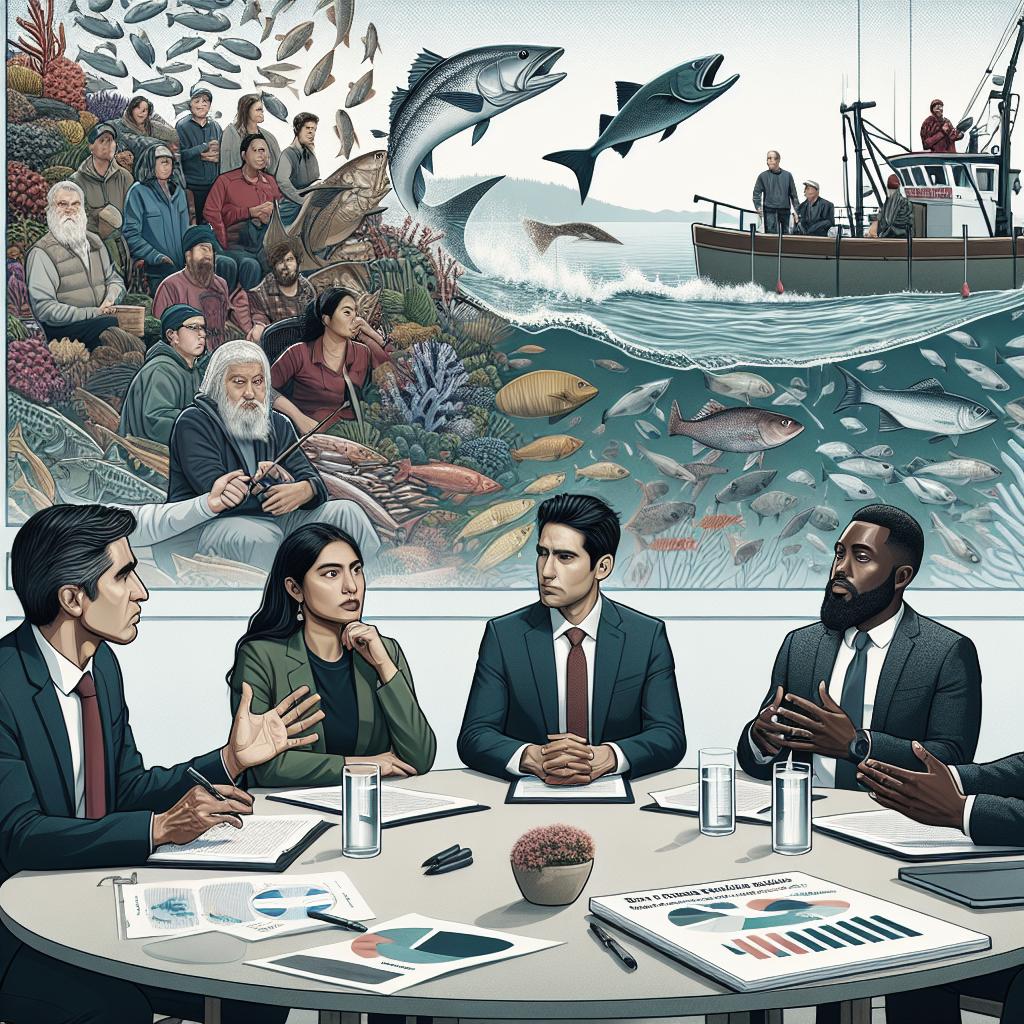
Image: Iconic Canadian Fishing Scene (Image courtesy of National Geographic).
Other
Audio guide for visually impaired readers will be available by the end of 2023.
Tables
| Debate Topic | Key Issues | Recommendations |
|---|---|---|
| Recreational Fisheries | Access vs. Conservation | Uniform guidelines, Education programs |
| Indigenous Fisheries | Rights Recognition, Resource Sharing | Co-management, Capacity Building |
| Commercial Fisheries and Aquaculture | Sustainability, Climate Adaptation | Ecosystem-based Management, Certification Schemes |
| Effective Management | Adaptive Strategies, Data Sharing | Digital Platforms, Adaptive Frameworks |
| Organization and Administration | Bureaucratic Inefficiency | Streamlined Processes, National Registry |
| Knowledge Production | Diverse Knowledge Integration | Collaborative Research, Indigenous Monitoring |
| Public Participation | Transparency, Engagement | Digital Tools, Educational Campaigns |
Share Options
Share
Share this article on: Facebook , Twitter , LinkedIn
“`