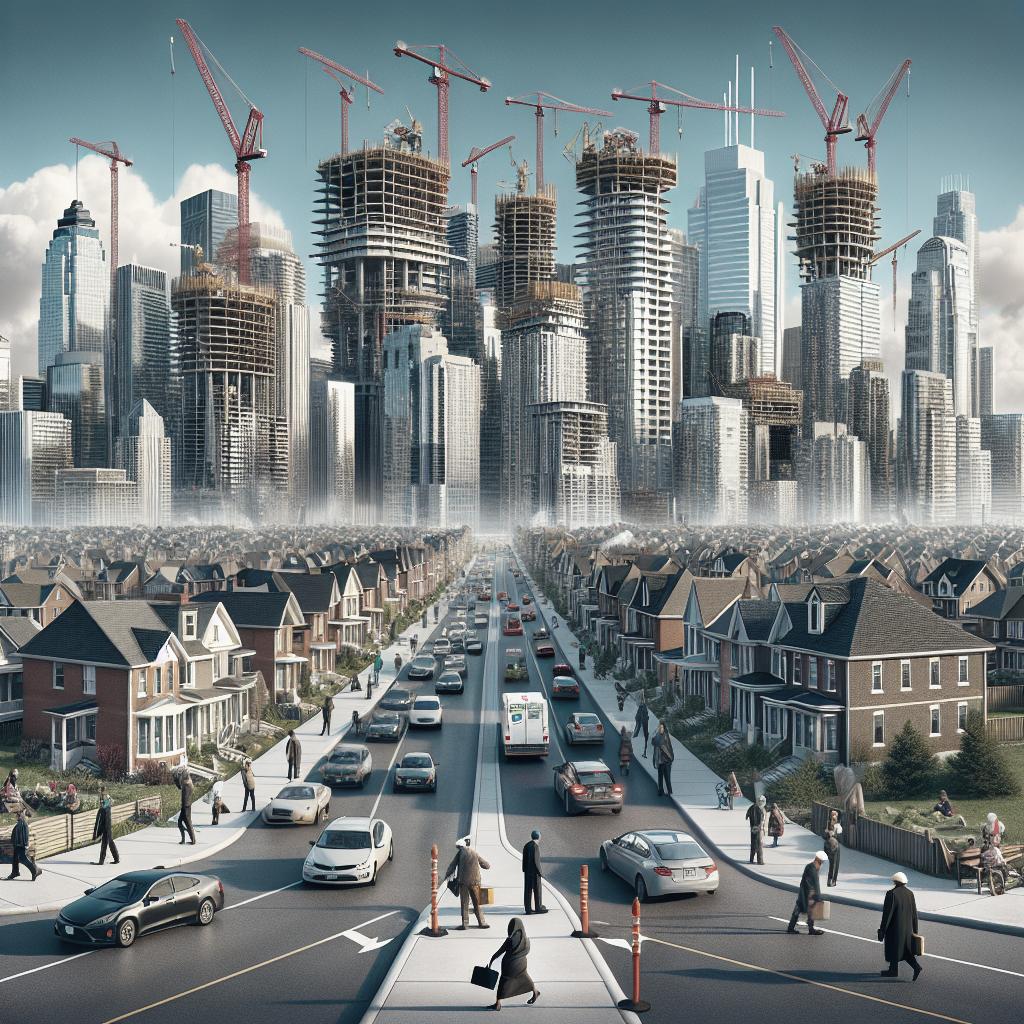
“`html
Current Issues in Canadian Urban Development
Urban development in Canada is a multifaceted issue reflecting both opportunities and challenges. As cities evolve, the balance between accommodating growing populations and maintaining livable environments becomes increasingly critical. This blog post explores key issues currently shaping Canadian urban landscapes, beginning with the enduring allure of suburban living. We’ll examine plans for densification that aim to create more sustainable cities and delve into the potential of transit-oriented development as an innovative urban planning strategy. Learning from global examples, we’ll also consider insights from the Netherlands’ compact cities and highlight the looming challenges urban areas must address to thrive. Through this exploration, the complexities of urban development in Canada come to light, underscoring the need for thoughtful planning and action.
The Suburban Dream
The allure of suburban living remains a potent force in Canadian urban development. For many individuals, the suburban dream encapsulates the desire for larger homes, more green spaces, and a sense of community away from the hustle and bustle of city centers. This preference has driven expansive residential developments across Canada’s peripheries, contributing to urban sprawl. While offering benefits like affordability and perceived safety, suburban living poses significant challenges for sustainable urban growth.
Urban sprawl leads to increased reliance on automobiles, longer commutes, and significant ecological impacts due to deforestation and habitat disruption. Moreover, the infrastructure required to support sprawling suburbs—such as roads, utilities, and public services—places a heavy financial burden on municipal governments. As cities like Toronto and Vancouver grapple with these issues, the sustainable development of suburban regions becomes an urgent question for policymakers.
Plans for Densification
In response to the challenges of suburban sprawl, Canadian cities are increasingly considering plans for densification. This approach focuses on increasing the population density of urban areas, particularly through the development of multi-family housing, mixed-use buildings, and commercial spaces in existing neighborhoods. Densification aims to make cities more vibrant and sustainable, reducing the need for outward expansion and fostering public transit accessibility.
Successful densification requires thoughtful urban design that balances the needs of existing residents with those of incoming populations. Community engagement is crucial to mitigate potential backlash and resistance often associated with increased density. Cities like Montreal and Calgary are experimenting with bylaw changes and financial incentives to encourage developers to build denser structures, striving to create inclusive communities that thrive in a compact urban environment.
Transit-Oriented Development: The Way Forward?
Transit-oriented development (TOD) emerges as a promising solution to urban challenges, focusing on creating high-density, mixed-use communities around public transit hubs. TOD aims to reduce reliance on cars by promoting public transit, walking, and cycling as primary means of transportation. This strategy not only enhances mobility but also fosters economic growth and environmental sustainability in urban centers.
Cities like Toronto have embraced TOD in their urban planning, envisioning a future where seamless connectivity defines residential and commercial landscapes. By prioritizing transit infrastructure projects alongside new developments, TOD seeks to transform cityscapes into accessible, pedestrian-friendly environments. However, implementing TOD effectively requires significant investments and cross-sector collaboration to ensure that all urban residents benefit from improved transit facilities and services.
Compact Cities: Lessons from the Netherlands
The Netherlands offers a compelling model for compact city development, demonstrating how strategic planning can create efficient and livable urban environments. Dutch cities are renowned for their emphasis on public transportation, cycling infrastructure, and green spaces, all of which contribute to high quality of life despite limited geographic space. Canadian cities can draw valuable lessons from this approach, particularly in integrating transportation systems with urban planning.
The Dutch experience underscores the importance of prioritizing sustainable mobility and creating urban spaces that minimize environmental impact while maximizing livability. Policies supporting mixed-use zoning, efficient land use, and strong public-private partnerships have been essential to the success of Dutch compact cities. Adapting these principles to the Canadian context could help address challenges related to density, congestion, and sustainability in urban development efforts.
Challenges to Come
Despite promising strategies, Canadian urban development faces numerous challenges. Rapid population growth, driven by immigration and natural increase, strains existing infrastructure and demands accelerated housing and service provision. Balancing development with environmental conservation remains a pressing issue, particularly as climate change exacerbates weather-related risks in urban regions.
Equity and affordability represent additional hurdles. As cities grow, ensuring access to quality housing, transportation, and amenities for all residents, regardless of income, becomes vital. Gentrification and rising property values threaten to push lower-income individuals and families out of central urban areas. Policymakers must address these socio-economic disparities to foster inclusive growth and prevent division within urban communities.
Summary of Main Points
| Issue | Key Points |
|---|---|
| The Suburban Dream | Suburban living remains popular but contributes to urban sprawl, ecological impact, and fiscal strain on municipalities. |
| Plans for Densification | Addresses suburban sprawl by increasing urban density to promote sustainable, vibrant communities near city centers. |
| Transit-Oriented Development | Focuses on high-density development around transit hubs to reduce car dependency and promote sustainable urban growth. |
| Compact Cities | Lessons from the Netherlands highlight efficient, sustainable urban planning through integrated transit and green infrastructure. |
| Challenges to Come | Urban growth challenges include infrastructure strain, equity, affordability, and climate adaptation needs. |
“`